
I’ve written before about the South African Old Vine Project. That was based on a presentation in Germany. This time I had the chance to explore it in place – and the whole idea is a fascinating cultural phenomenon.
Old Vines have become a topic of interest to the wine world in the last few years. Jancis Robinson and her team especially have been discussing them and promoting their value in a number of geographies (https://www.jancisrobinson.com/articles/old-vine-registry-launched). South Africa, perhaps more than any other country, has been in the forefront of this campaign. Partly, it is because the country has a great heritage and it benefits from having a way to promote that heritage. Partly it is because there is an organisation now known as SAWIS – SA Wine Industry Information and Systems – whose antecedents have, since 1900, been keeping very precise records of vineyard plantings, when grapes were planted and what cultivars were used. If you search their statistical database you will discover that there is 0.81 of a hectare of harslevelu planted in the Swartland that is more than 20 years old, although that area pales next to the 33.16 ha. of bukettraube planted in the same age category. (No, I haven’t heard of it before either but clearly it has much greater potential than harslevelu.) SAWIS doesn’t run the Old Vine Project but its rigorously maintained database allows the certification of old vines – which in this case means those with more than 35 years age.
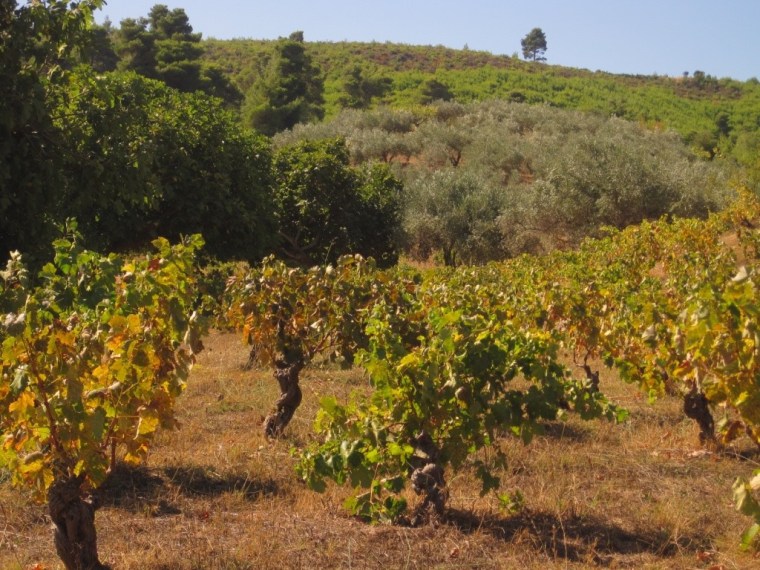
When I was there before Christmas we had three linked presentations on the Project, each from a different perspective. The eminent South African viticulturist Rosa Kruger talked about the origins of the project. In 2013 there were a mere 8 pioneer members developing the project; a decade on the number had grown to 140 – and with links now to similar groups in Spain, Italy, Argentina, California amongst others. The Project keeps a registry of Old Vines, it teaches people how to prune them correctly (their age gives them special needs), and it tries to preserve the knowledge and memories of older farmers of traditional work methods and of the land. Rosa also posed an interesting question: why have the vines which have survived remained alive? What is specific to them or their environment or management which has allowed this to happen?
The second presenter was Jonathan Steyn, a business professor at the University of Cape Town and a friend, who wanted to talk about the value of old vines to producers. He asked what the value of the Old Vine category is in South Africa. He noted that the label did increase the recognition of, and price paid for, chenin blanc. This is significant given that this is a wine grape which is substantially undervalued for the quality it can deliver (and not just in South Africa) and that the label acts very much in a similar way to the designation ‘luxury’ in persuading South African drinkers to buy the wine.
The final speaker was the doyen of South African wine writers, Michael Fridjon. He noted that, unlike Europe, there had been no traditional recognition that you get more concentrated flavours from older wines. Cooperatives, who brought the majority of the fruit, used it to produce brandy for which wine age was irrelevant. It needed the collapse of the cooperative system in the 1990s and a few far-sighted wine producers to rethink the approach to these vines – a form of resurrection for the industry, particularly in regions which had traditionally been viewed as producing lower quality fruit. A heritage was (re)discovered – but it took the end of the old Afrikaner protectionist system to allow it to be found. Many farmers had kept old vineyards for sentimental rather than economic reasons, because ‘grandpa planted it in the 1929s’. This suggests a system that is a fault but individuals whose sense of identity has overridden that and leaves their individual heritage – the sudden emergence of ‘good’ wine.
What we see is a great idea rooted in history and creating a quality guarantee around its production, offering economic advantage, and in a sustaining story for the South African wine industry which talks of individuals leaving their mark despite the institutions. Combined this makes an underlining mythology for the whole category. Don’t take that comment as being critical of what’s happening; there is no doubt as well, that ‘Old Vines’ can make for interesting and very enjoyable wines: see the latest ‘interesting wine’ I have posted.
And two afterthoughts. SAWIS has seven vineyards older than 1900 in its records, age unknown but all recorded as 1900. These form the ur-myth for the whole idea, the vineyards lost in time which form the paradigm for what follows. One of these vineyards is ‘T Voetpad – source of a wine which I’ve already raved about before. Meanwhile, the foundation of SAWIS itself has its origins in difficult – even dangerous – times. In 1900 the British Cape Colony was in the middle of a bitter war with the independent Boer Republics to the north. The year saw the British capture the key Boer cities, use a scorched earth policy and create a series of appalling concentration camps – provoking a Boer guerrilla campaign in response. Over the following two years the brilliant Boer leader, Jan Christian Smuts, led a guerrilla campaign through the Cape Colony including some of wine regions. It’s astonishing that anyone had time to worry about producing a vineyard registry but also maybe a sign that even in the darkest times the wine industry can manage to plan for the future.
 Wine, Culture & Society