Marsala: Bringing back a wine from the dead.

Marsala is a drink which is barely remembered today, even by those who drink fortified wines regularly.  Its major market is as a product sold cheaply for cooking with, mainly in Italy and France, often flavoured with other products like vanilla or eggs – or worse.  As an ingredient it adds richness to a sauce, maybe some nutty, torrified sweetness.  There is nothing wrong with chefs using it; but there is – or at least was – much more to the wine than that.

Marsala was developed by an English merchant, John Woodhouse, in 1773.   I avoid saying that he invented it because wine – rich, strong, wine – was already being made in this part of Sicily before Woodhouse arrived there; those old wines might merely have been made from grapes left to concentrate sugars late on the vine, or may be strengthened with mosto cotto – boiled (thus concentrated) grape juice making a kind of caramelised juice which could be added to the wine to sweeten it and add flavour.  What Woodhouse did was see how it could be marketed on the back of sherry, port and Madeira and – like those wines – be produced to a consistent style and standard, by careful fortification.  The Marsalese talk of their wine as being similar to Madeira, though to me the link to sherry is perhaps more useful. 

The fortification meant that the wine was able to travel to all corners of the British empire in rickety sailing ships without turning to vinegar.  By the end of the 19th century, on the back of both British merchants and some enterprising local producers the wine had become as well known as the other fortified wines.  Yet as recognition of its use as a cooking aid expanded, so its reputation declined.  Production was concentrated in larger companies with less connection to local viticultural traditions who mass produced cheap wines which were sold providing profits coming from volume sales with thin margins.  Most producers went out of business and the market for quality Marsala has dropped dramatically over the last century, to the point where it is almost an extinct wine.

Almost, but not quite.  A few still want to make a wine which continues to reflect its old reputation.  Some of these have a foot in both camps – the volume and the quality.  A small number are still the standard bearers for the latter, trying to keep the body alive before it dies, or maybe resuscitate it so that it can live again.

One of the most well-known of these ‘resuscitators’ is the firm Marco de Bartoli.  The eponymous founder had his roots in the marsala establishment, but decided, in 1980, that he wanted to rediscover the old styles of the wine, made to be drunk rather than just used as a condiment in the kitchen.  It was a difficult process, which produced a great deal of local opposition.  I don’t want here to go into that history (interested readers can explore the story in Nick Belfrage’s book Brunello to Zibbibo); what I am interested in is how, today, the company is producing great wines which challenge the long-term decline of the Marsala denominazione and whether or not this means the wine can be brought back to life.

When Marco de Bartoli decided to set up in wine production, he chose to leave the town of Marsala, where the main companies are based, to escape the claustrophobic emphasis on ‘cooking wine’, and created his winery in locality of Samperi, about 12 kilometres away.  Rather than focus just on production, he wanted to start with the vineyard.  It’s a chalky soil (much like that for sherry grapes), with deep sub-soil, ideal for water retention in the hot, dry summers.  He chose only to work with the grillo grape, rather than the higher-yielding and less interesting cataratto.  He also decided only to use his own grapes, rather than buy in from lots of local growers (this enables careful quality control).  All their grapes are grown around the winery, except for their red table wines, which need a different soil, and a passito from Pantalleria.  The key here is the attention to detail and commitment to quality, and a focus on place rather than a wine style, which they claim to be alone in the region to have.  Grillo, so Sebastiano de Bartoli says, is essential for conveying that sense of Samperi – ‘it’s talking about the territory’.  Territory is a word that Sebastiano, one of Marco’s sons, keeps returning to with emphasis when we talk and encompasses not just the terroir, but also the traditional variety and the traditions of making the wine.

Chalky soils

Marco de Bartoli also had a vision to renew the wine styles.  He wanted to return to the original ‘madeira from Marsala’ (as the wine was first known), sold by Woodhouse to Horatio Nelson when his fleet was in this part of the world.  Even more than that – as we’ll see – the vision was to see if the styles of wine made before Woodhouse could also be recreated.  Wines that were already distinctive and of high quality.  As part of his drive for improving quality, when he established the cellar in the 1980s he bought up a lot of stock of old wines from other small producers who were selling up and leaving the business – even one butt of wine from 1903, which they still use as blending material for some of their top wines.
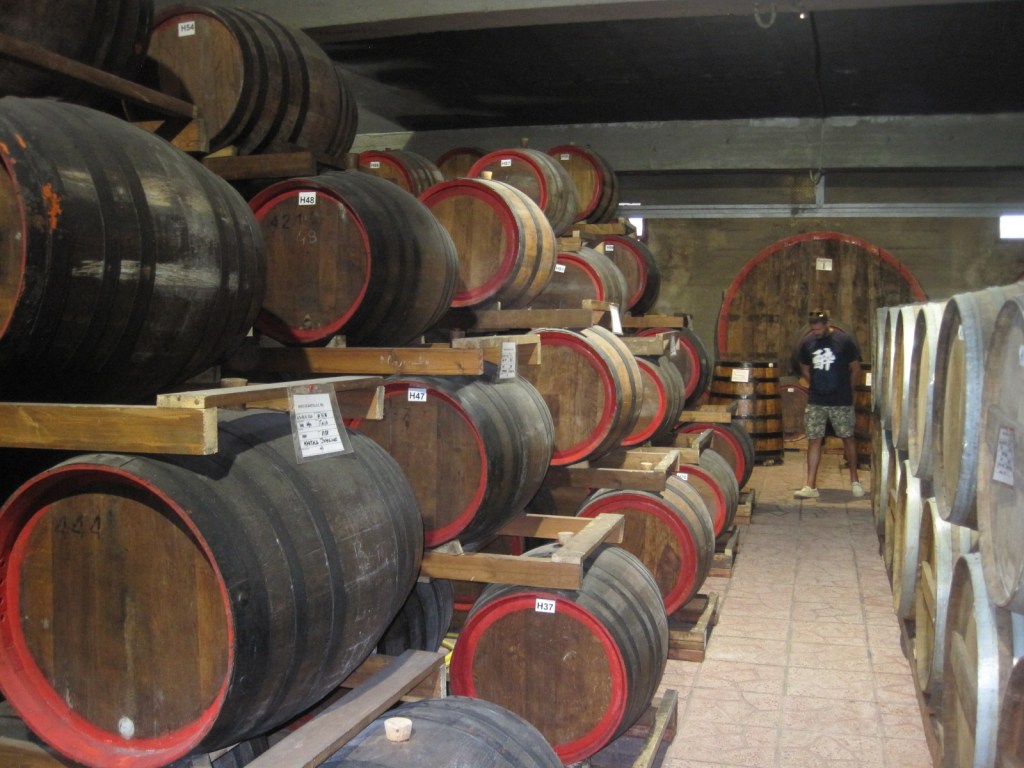
The cellar at De Bartoli

The production of marsala is complicated, and the profusion of styles makes even sherry look as simple as a child’s six piece jigsaw (for those who are interested and can access Jancis Robinson’s website there is a great article about it by Tim Jackson MW here).  Crucially there are two distinctive styles: a wine which is fermented dry then fortified to about 19% alcohol and aged for five years or more, called vergine, and similar to an oloroso sherry; the second is a wine fortified to 17-19% with alcoholic grape juice or mosto cotto added to sweeten it to one of three different sweetness levels – plus three different colours and three different periods of ageing.  The permutations are enormous, especially when you add on at least six other official terms which can be applied to the wine.  However, I’m just interested in the vergine and the best sweet(ish) wines (superiore riserva) as these are the most significant qualitatively and historically.

Nevertheless, Marco de Bartoli’s attempt to recreate the older wine styles went further than just finding a special place and making good wine.  He wanted to take the vergine wine back to its pre-Woodhouse roots; an unfortified but high alcohol, oxidatively aged, wine.  He has done this with Vecchio Samperi, a great, complex wine with intensity, length and beautiful balance; it’s also aged in a solera, again mirroring sherry.  You could argue that this is a desire to make an older form of authenticity: the Sicilian marsala, of elegance and power, that preceded the arrival of the British.  There’s just one problem though.  The specification for the PDO of marsala requires contemporary vergine wines to be fortified to 18% alcohol at least – and the de Bartoli version is an unfortified wine.  It may reflect the Sicilian vergine of over 250 years ago, but it can’t call itself that.
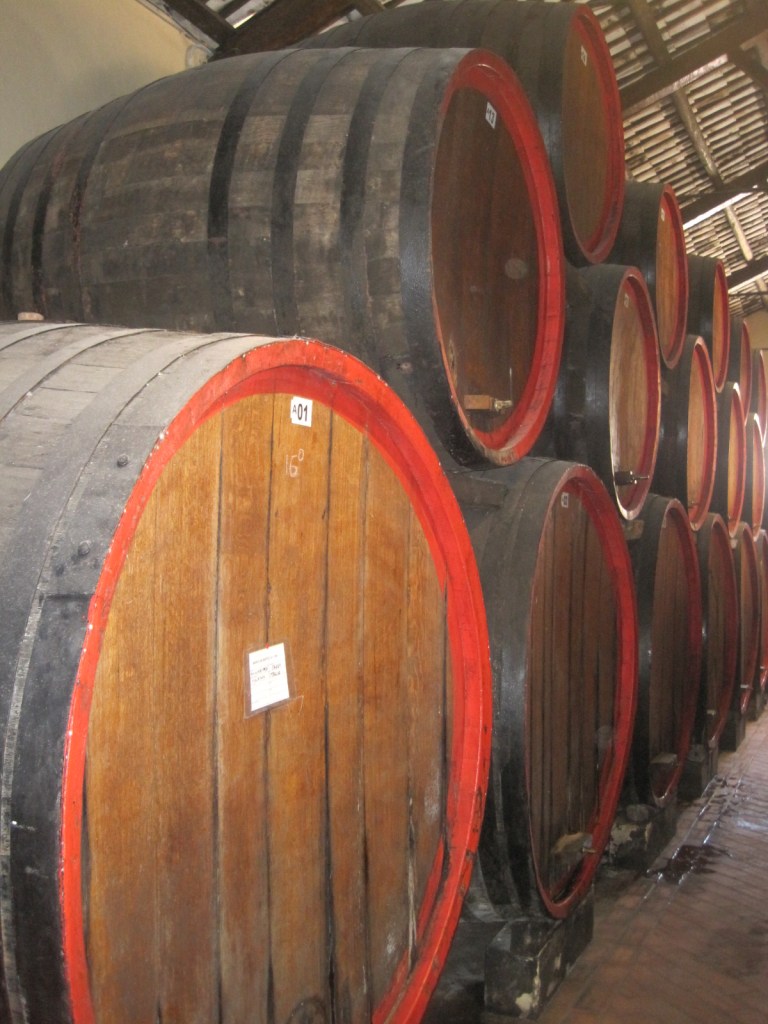
Vecchio Samperi Solera at De Bartoli

Just once did Marco make a ‘legal’ vergine – in 1988 – just really to show that he could.  It’s similar to the Vecchio Samperi, very complex, though – inevitably – with more evident alcohol.  For what it’s worth I prefer the non-fortified equivalent.  However, it’s never to be repeated; Sebastiano told me they haven’t made another since and when the supplies of this wine run out that will be it.  You need to get it soon if you want to try it (though be prepared to pay upwards of 100€ a bottle for the pleasure).  Again, we have a disappearing wine.

As well as this dry style, wines with the designation ‘marsala’ are still made by the company.  These are fortified, and are sweeter, also having a great emphasis on poise and balance (showing a distinctive hint of curry aromas, which are often typical of good marsala); these, however, are fortified in accordance with the regulations.  Even here, though, they are making the wine as they believe the first Woodhouse marsalas were made, using fortified grape juice to sweeten, and not the mosto cotto which they consider gives simpler, less fine wines, with the cooked character masking the vinous nature of the drink.

For all that the company doesn’t live in the past.  They have been at the forefront of developing red and white table wines in the region – and the acidity in grillo allows some very fresh, direct white wines to be made.  Sebastiano also showed me the wines they are making with skin contact and ageing in amphorae, as well as an ancestral method bottle fermented sparkling wine.  All very trendy – while carefully made; each a good example of the style.

Is this enough to save the marsala?  I’m a sucker for oxidatively aged wines and find what they offer is brilliant, and good value.  The Vecchio Samperi is gorgeous and has less alcohol than a typical amontillado or oloroso sherry, so I’ll go on drinking it.  However, I’m hardly the typical wine drinker and my few bottles won’t save the industry; a drinker who prefers New Zealand Sauvignon blanc or Gevrey Chambertin may find them a bit strange.  Even Italians don’t seem to know about it, and certainly don’t seem to drink it, which is a shame given their commitment to other ancient styles of wine like amarone and vin santo.  The wines deserve a wider audience, but is there enough momentum now?  As Sebastiano says, as his parting shot, ‘port is a big nation, sherry and madeira are large regions.  Marsala is just a small town’, and perhaps it’s on the way to being a dead town.  Yet I also suspect the family don’t worry about that so much; they are there to perpetuate a tradition and respect the wines of the past, to ‘make a speciality’ as he says.  Whatever happens beyond them isn’t so significant then.

Other good marsalas are available: Rallo have a long tradition with the style.  There are also Carlo Pellegrino (who are putting a lot of effort into marketing cheaper but still carefully-made wines) and Duca du Salaparuta; both produce some good wines, though these are much larger company with a range of offerings to distract them.  I’d love the wine to continue, but at present I’m not sure that it will.  The fact that you have to get to the end of Italy, almost the southernmost tip of Europe, to see the wines doesn’t really help the revival.  It becomes a pilgrimage, rather than part of a tourist destination.  
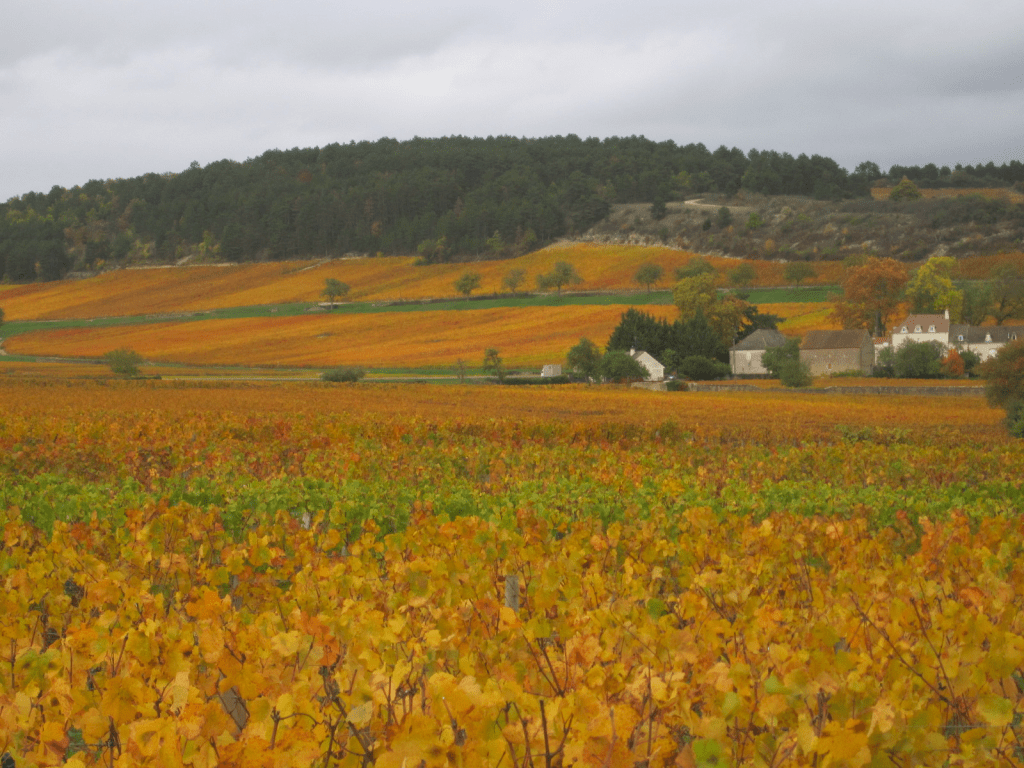
A forgotten corner of Champagne

Most champagne lovers know that while the majority of the grapes for the wine they drink come from the north of the region, around Reims and Epernay, over one-fifth come from the south – a region often called the Côte des Bars, in the Aube département.  These vineyards are 30 kilometres or more to the southeast of the city of Troyes and home to some very good producers.  The best known, perhaps, is Drappier (a favourite of Charles de Gaulle) and also a very good cooperative which produces the wine known as Veuve Devaux.

Troyes is an interesting town.  Its centre is beautiful, redolent with half-timbered renaissance buildings, it has an excellent cathedral, and in the Middle Ages surpassed Reims to be the capital of the county of Champagne.  It was a major trading centre with renowned fairs for the trading of cloth and home to Rashi, one of the most celebrated medieval Jewish thinkers.  It also has, if you view it from the air, a centre carved out by roads and a stream which mirrors the shape of a champagne cork when it has been expelled from the bottle.  Yet for all this, contemporary Troyes is not so much a champagne (wine) centre.  The vineyards of the Côte des Bars are a little too far away, so it has rather turned its back on the most prestigious product of the region; what many locals first remark about it is that it is home to a large McArthur Glen outlet retail park!

Yet wine isn’t entirely absent.  Just ten kilometres to the west is the commune of Montgueux – a single village which has a bit over 200 hectares of vineyards and the right to make the wine.  Although it is administratively in the Aube département, it doesn’t share the same geology as the vineyards to its east; rather it is essentially an extension of the chalky hills of Sézanne, further to its north.  These chalk-rich soils (with a noticeable flint content), and the south-eastern facing slopes, make it ideal for the chardonnay grape and overwhelmingly that is what is planted there.  I’ve entitled this piece ‘a forgotten corner…’ but that is not entirely true.  Champagne lovers have registered some good producers there, led by Champagne Jacques Lassaigne; nevertheless, the small size of the planted area at its distance from the other main parts of the wine region still mean that it is substantially overlooked.

Even more, champagne in Montgueux might not exist today if it wasn’t for the persistence of one man.  When I visited the village recently I met Hélène Beaugrand, the fourth generation winemaker of Champagne Beaugrand.  She has an interesting background, having worked as a winemaker overseas (including Australia and South Africa) in the 1990s.  The domaine was founded by her great-grandfather, Léon Beaugrand and has been selling wine since 1930 (very early for a vigneron in Champagne). 

Records suggest that vines were cultivated in Montgueux back in the 12th century.  Until the 1890s many villages had some vines, with somewhere between 50,000 and 80,000 hectares across the region.  Then phylloxera hit and it became too expensive to replant and not profitable enough when more money was made from wheat or sugar beet – and to be a farmer was better than being a vigneron, who were treated as the lowest of the low.  When the appellation was finalised in 1927 it was limited to 34 000 hectares, as most places no longer had any desire to make the wine (including all the villages around Montgueux).  In practice, by 1950, only 11,000 hectares were planted. 

So why are their vines still in Montgueux?  Léon Beaugrand was a grower in the village from about 1900 on – so had faith in the place in the post-phylloxera era.  He had been a négociant from the south of France, selling to Troyes; he liked the village and planted vines there against the trend.  At this time, although the grapes were sold to the large champagne Houses in Reims and Epernay, the wines of the region were considered ‘second class’.  From 1911 to 1927 were major arguments over whether or not the Aube could be included in the appellation, and it was only finally accepted that they should be in 1927.  Léon Beaugrand fought for the right to have Montgueux in the appellation, and tried to get the growers in surrounding villages to join with him – but they weren’t interested, nor were most of his neighbours.  Nevertheless, Léon was persistent, and against the odds, and the reluctance of the institutional powers of champagne, succeeded.  Even so, it was not until the 1950s that vines began to be more widely planted (Veuve Clicquot came to the village to buy grapes) and only in the 1970s did other récoltants-manipulants – the growers who would sell wine to the public as well as just grapes to the négociants – begin to emerge.  There are now 19 of them there.

Meanwhile, the domaine has to evolve.  French succession laws mean that the vineyard land is being split up and Hélène is only retaining part of it.  The wines will evolve and change.  Yet, based on the wines she has been making for the family over the last 15 years, this won’t be a problem for her – and she has plans for how the domaine will evolve.  If you ever get to find the wines they are worth trying, and show the ability of chardonnay, with its elevated level of acidity, to give champagne the backbone to age gracefully and develop real complexity; the cuvée reserve is a good example of this, a blend but based on 2009 and 2010 base wine, very complex and very gastronomic.  They are also made from old vines (dating back to the 1960s and earlier) which is unusual with champagne, where replanting to increase yields normally starts at about 40 years.

The point of this blog post?  To show that one determined individual with a vision can still shape the direction of a wine region or of a wine brand – whatever the challenges they face.  It’s not all just down to impersonal forces or the larger actors to determine events and craft success.

Flavour and colour: Wine taste and synaesthesia

This is not a post about tasting wine, whether it should be metaphorical and romantic or analytical and scientific (though maybe I’ll come back to that one day).  Rather, it’s about what a wine may ‘look’ like when it is drunk.  This is prompted by two short conversations over a couple of afternoons with a former student of mine in Dijon, Zheyi Mai, who now lives in Provence.  She came to us from Macau and spent a year on our MBA programme.

That’s barely relevant, however.  What I’m interested is in what we might call Zheyi’s synaesthetic response to the taste of wine.  Synaesthesia is essentially a sensory interaction – one stimulus (classically often letters and numbers but it could be a sound) regularly prompt a sense of (the same) colour, or of emotion or another sensation.  Sometimes other names or concepts are associated with specific mental ‘places’.  Sounds, too, may stimulate other physical sensations.

When Zheyi tastes she gets a very clear image which she associates with what she is tasting.  Often it is just a colour or a series of colours, sometimes this resolves itself into an image.  We drank some green tea and I asked her what the colour was, and she replied that it was grey; quite a light grey (possibly shading to something darker) but with a very soft texture, rather smooth.  A red wine we had the previous day was terracotta but also with some pale to mid-blue tones.  I asked if it was the aromas or the structure of the wine (acid, tannin, weight, alcohol etc) which stimulated the image and she replied that the structure gave texture to the image (as if paint was pasted on with a palate knife) and the aromas provided the colours and tones.

Most of what Zheyi sees is this abstract shading of colours overlaid by the texture of the colours.  Yet in one instance she talked of a specific image – she tasted once a 2004 Romanée Conti (lucky lady!) and immediately visualised a beautiful young brunette lady in an elegant magenta dress and wearing an expensive and subtle perfume; the woman walked past her as if on a film screen and turned momentarily to give her a smile.  This in turn makes me wonder if the quality (complexity or interest) or definition of a wine is more likely to produce an image rather than colours.

What is more interesting is that Zheyi claims that the feelings evoked by a wine, which link to the image, is a much more effective way for her to remember wines than any analytic process.  We taught her to taste systematically (the Wine and Spirits Education Trust approach), and she uses that to analyse a wine – but it is of less use than the image/colour relationship when it’s necessary to remember a wine from the past.  Feeling, not analysis, is what counts (and I can confirm that she is a very good taster, with the best marks of her cohort when we taught them wine tasting).

There has been a lot of research into cross-sensory relationships between wine and other senses (notably by the Oxford psychologist Charles Spence and his former PhD student Janice Wang), much of it looking at the relationship of wine to music.  But I’ve never heard of anything such as the experience Zheyi has; if anyone else has had this please let me know.  In the meantime, she’s begun to start producing pictures based on the wine she has drunk (see her Instagram account at Mai.Art.Wine).  There will be more – I’ve just given her three bottles of wine and asked her to produce pictures based on what she tastes.  She says that the images or colours develop and change as the wine changes in the glass, so I’m hoping she’ll look at the wines over a day or two to see if the pictures evolve.  More to come on this when I see the pictures.

Back Again…

25th June 2021

It’s been a long time since I posted; if anyone was hanging out for my next piece I’m sorry for the delay!  It’s been a difficult time.  The most important reason for the silence is the inability to travel.  My reflections on wine and its place in culture and society depend on visiting people and places – and for those of us living in most of Europe that’s been effectively barred until very recently.  The second reason is that over the last few months I’ve been engaged in a major project also related to wine, culture and society.  I’m the co-ordinating editor (along with six other leading academics in the field) of a new book to be published by Routledge later this year – their ‘Handbook of Wine and Culture’.  It has 57 contributors, 45 chapters and will weigh in at around 240,000 words; a major undertaking which has been very time consuming.  More of this later in the year.

The third reason for my silence is that, early on in all of this, I caught Covid (in class – from a student).  It wasn’t life-threatening, but it was rather unpleasant at the time, and took me out for about three weeks – which resulted in a rush to catch up on the day job and even less time on writing here.

I didn’t lose my sense of taste when I was sick (unlike a couple of other members of the family, such as my eldest daughter, who wrote more about her experience here) but it started to become rather worrying for someone who earns their living partly by their nose.  (The man I buy cheese from at the market in the French town where I live had Covid in January, lost his sense of smell and hasn’t regained it; that must be very depressing, though he always as a very jovial air when I come to buy from his stall).

However, what did happen to me for a couple of weeks was that my sense of taste changed dramatically.  I could still smell, but tastes were fundamentally altered, and for the worse.  Coffee suddenly tasted disgusting; think roasted earth, ground and then doused in water.  Many other foods tasted in that direction.  I didn’t even feel like wine – so at least I was spared that repugnance which may have destroyed my love for it for ever.  Unlikely, actually – three weeks later I got back to drinking coffee and everything else fitted in to place.  That, though, was my brush with gustatory despair.  Given what many have suffered living or dying I have nothing to complain of.

Anyway, normal service is now being restored.  Coming up over the next few weeks a bit more about Retsina in Greece, some reflections on a German wine cooperative and a bit on an out-of-the-way village in Champagne.  Plus a few more ‘interesting’ wines and – later, I hope – some posts on Sicily.

The Magon Project

This post is based on a trip to Tunisia which I took before the onset of Covid-19 – but which the pestilence rather pushed to one side.  However, it’s time to continue (the new) normal service and return to some aspects of wine and culture that go beyond plague.  This post also (coincidentally) follows the one I wrote before Christmas, as it is also about religion, although in a very different context.

Most people probably wouldn’t associate Tunisia with wine but – both historically and in contemporary society – that would be a mistake.  Even today, despite having a majority Muslim population, Tunisia makes wine and has it widely available, including in many restaurants. The capital, Tunis, is just to the south-west of the site of Carthage, the major ancient settlement in the region.  Carthage was founded in about 814 CE by the Phoenicians – the seafaring peoples from what is modern Lebanon, who were the first great traders of wine across the Mediterranean (a large wine press dating from this period has just been discovered in Lebanon which may have fuelled this trade). This turned into an autonomous state, Carthage, which at its peak challenged the growing power of Rome, so that there were a series of wars between them eventually won by the Romans.  They destroyed Carthage – although the city was later rebuilt within their empire.  The destruction included a great library and the Romans left all the books in their wake.  All, that is, except the works of Mago, which the destroyers retrieved because of their fame and took back to Italy.

Why these books?  Mago – known now in Tunisia as Magon (who some claim  was one of the earliest settlers although others think he lived around 500 BCE) wrote a treatise on Agriculture, probably the first such book.  He was very influential on later Greek and Roman authors.  So why does this interest us?  Because viticulture is one branch of agriculture, and Magon wrote on planting and pruning vines and making wine.  He even had a section on why the most productive vineyards face north – which is, of course, not what we would normally claim in the Northern Hemisphere but makes sense in a hot climate like that of North Africa.

Magon is still revered in Tunisia; so much so that there is now the ‘Magon Project’; this is a transnational partnership between Tunisia and Italy – specifically Sicily, only about 125 kilometres away over the sea – to underscore their culinary and cultural links; it is part financed by the EU.  One of its major foci is on the links relating to wine (another would be couscous, the staple food of Tunisia – and which has a European history only in Sicily as the island was ruled by Arabs for over 100 years).  It seeks to ‘trace the footsteps of Magon’ by using the archaeology of the two countries; it is also part of an international network of wine routes – and even has its own Facebook page.  The project focuses on the ruins of Carthage and Cap Bon, a peninsula to the east of Tunis where most of the vineyards are based.  One of the key archaeological sites, Kerkouane, was conquered briefly by a Sicilian tyrant, Agathocles of Syracuse, during his fight with Carthage, so I was told.  Relations between the two regions were not always as harmonious as they seem to be now. The Magon Project is explicit about the vinous link with Sicily and Italy – but of course, as a Muslim country it has to be careful not to play it up too much.  One of the interpretative panels at Kerkouane talks about moscato, and the famous wines made from it on the Italian island of Pantelleria.  This latter, just 60 kilometres away, is visible in the hazy distance from Cap Bon.  It also forms a link to the only wine I tried in Tunisia which I really enjoyed.

The key beneficiaries of this (at least while international tourism was operating) were tour companies who could take you on wine and/or history tours outside the capital, Tunis.  The country needs this industry; its infrastructure is woefully underfunded, and it urgently needs more capital.  As an aside, my own view was that the tourist attractions were far too cheap to enter and international visitors could contribute a lot more for the privilege of exploring a great archaeological heritage; Carthage – where you can spend hours exploring – costs less than 4€ to enter.  There is also a national museum with the greatest collection of mosaics in the world which is well worth visiting.

So, 2800 years on, Magon still has an influence – even if it is no longer on viticulture or the better production of wine.  He has been co-opted as an icon for the heritage and agricultural dynamism of the country’s ancestors.

The Golden Slope of the Côte d’Or.

This is the perfect day for looking at the changing, autumnal colours of Burgundy vineyards in the Côte d’Or.  Still touches of green or lime green here or there, but more intensely yellow, gold and old gold through to orange and occasional flashes of carmine.

The Côte d’Or – literally the ‘golden slope’ – got its name from the autumn colours on the escarpment that runs for about 55 kilometres from Dijon south-west beyond Beaune, down to Maranges.  Yet more than that, the name of the vineyard gave the name to the local département – equivalent to a shire or county.

Nearly all départements in France are named after geographical features – overwhelmingly rivers or mountains.  A few – such as the two Savoies, are named after a historical region, but that is rare.  Two, however, have a name derived from local agriculture.  One is a spirit – Calvados, in Normandy, named after the apple brandy which is made there; the other is the Côte d’Or.  Thus such is the renown of the wines made on it, this administrative region of 8760 km2 takes its name from a narrow, short strip of vineyard land.

You could also think that, echoing the old-gold gleam of a good aged Montrachet, the name comes from the colour of the white wines here.  More prosaically it’s possible to see in the name a reflection of the value that the wines now bring to the vignerons and negociants of the region.  Yet maybe, in the most recent years, it could be the value brought merely because of the ownership of the land.  With the top vineyard land now selling for 10, 13 even more than 30 million euros per hectare those who sit on this soil are also sitting on gold.  The impact which this will have on the future economy and social structure of the region is complex – and worth returning to in the future.

Wine in the Time of Pestilence VII – Wine Distribution

The wine industry is not, of course, alone in the havoc Covid-19 has wreaked on it.  All businesses (except maybe those producing face masks and – at least early on – toilet rolls) have suffered, and wine is low down to list of priority industries for the general health of the world.  As I’ve noted in previous posts, enterprising producers have been working to find ways to get their wines direct to consumers – but the distribution industry generally has been thrown into turmoil by the crisis.  Harpers – a UK wine trade magazine – ran an article suggesting that the wine economy would take five years to rebound from the chaos.  Yet, as I’ve said in all my posts, the disease has not created new problems for the wine distributors; rather it has just accelerated the speed of changes already taking place.  Further, these changes develop in the context of the specific cultures where wine is sold.

The hospitality sector is clearly going to contract.  In some countries bars and restaurants are reopening, but social distancing means that they can accept fewer customers so their income will decline.  In France I’ve already noticed a number of restaurants that have just failed to reopen as lockdown is ending.  One issue here is the cultural insistence that meals only happen between midday and 2 p.m. and then after 7 p.m. at night.  If they could bring themselves to accept that some people at least (if only summer tourists from other countries) would like the chance to eat a bit earlier, have a late lunch, or graze all day they might do more business.  In other countries the decline of the town centre in the face of online shopping and rents that go up in the face of that decline has already been putting many restaurants out of business.  Meanwhile, as Robert Joseph has noted, if work patterns change (at least in Western countries) so that more people work more often at home that may put further restaurants in the centre of major cities under pressure.  Additionally, as the same perceptive critic notes, if there is a decline in restaurants, where consumers get to meet new wines introduced by sommeliers, what does that mean for producers in places such as Georgia, Sicily, or Carnuntum?  The key question is – how is the on-trade for wine going to be recreated over the next decade?

Getting wine to consumers – particularly under the influence of Amazon and similar wine-focused organisations like Naked Wines – was already evolving, and this has now accelerated.  In early June Amazon announced an ‘online wine store’ in Australia; meanwhile, according to Reuters Naked Wines has just stated that their June sales saw a 67% increase on the same month in 2019.  Low overheads reduce costs (and thus the price of the wine) and rapid delivery increases consumer convenience.  They may not squeeze out all the independent retailers but they could put pressure on larger suppliers (especially those who are already going online).  Again, there are cultural issues at play.  In Australia, as in much of Western Europe, online purchasing of wine is still really in early stages; however, in China, with the rise of behemoths like Alibaba, the population has already accustomed itself to making purchases online.  Yet China itself is proving paradoxical here.  Even before the disease hit there in January imports of wine in to the country were declining in both volume and value.  According to one of my correspondents there, based on the General Administration of Customs of China the value of year on year imports of wine in to the country decreased in five of the last six months of the year.  Why is this?  No doubt the trade war with the USA has caused some price rises, and beyond that perhaps dissuading Chinese consumers from buy wines made by allies of the States.  Perhaps there is a partisan move to drinking more of its home-produced wines (which are steadily improving in quality).  However, what then followed –a year-on-year decline in import volume for the first three months of the year of 25.3% and in value of 31.1% just reinforced that.  Subsequent political events will be doing nothing to reverse that process.  Politics trumps the need for wine here.

I’ve always argued that the problem with selling wine online is that the physical interaction with the product (most obviously the taste and smell) limits how much it can be sold virtually; however, that is to ignore the fact that so many (especially younger) people now make their purchase decisions based not on taste but on recommendation by influencers and the online communities to which they belong.  Meanwhile in the US online sales of alcohol doubled in the year to May and the UK showed a 50% growth over the same period.  What is more, it seems that over the time since the crisis began consumers have been maintaining their move towards online alcohol shopping so it is probably likely to be continued when (if) the pandemic disappears.

Meanwhile, two countries present particularly interesting case studies about the effect of the crisis on wine distribution – both of them with an element of ‘prohibition’ in their cultural make up.  In the wake of the end of prohibition in the USA in 1932 strict rules were introduced to manage how alcohol got to the consumer and (in part) to make it more expensive: this is the notorious three-tier system.  In each state there must be one ‘importer’, a separate wholesaler, and a third retailer direct to the consumer.  This gives big power to the large-scale distributors (who are reluctant to see the system change as it guarantees them an income but it is not popular with wine producers, who may not be able to sell wine directly interstate, nor with consumers who see three layers of distribution each taking their own cut (and thus pushing up prices) and who are limited in their ability to buy direct from producers.  Additionally, those who seek new ways of getting wine to consumers (such as Amazon) may find the system works against them.  A debate has developed on how the world of wine may change – but the power of the anti-alcohol lobby remains substantial, and is allied in this case to alcohol distributors with a vested interest in the status quo. 

Finally, spare a thought for poor South African drinkers.  As I noted before, in the early stages of the pandemic not just sales, but even the movement of alcohol was banned (thus essentially stopping exports).  That was eased at the beginning of June – but the restrictions have just been reintroduced.  This produced a brilliantly articulate groan of agony from one of the country’s leading wine journalists, Michael Fridjhon. While he acknowledges that wine causes all kinds of problems for some segments of the local population, notably more alienated groups with less access to power or wealth, all this is doing is stymieing that part of the nation’s economic recovery based on wine exports.  Further, it is entirely undermining the attempts to rescue the hospitality sector.  Fridjhon points out that the majority of the ANC’s leadership is officially in favour of prohibition (which has, of course, never succeeded in any other country).  Additionally, I’d suggest, with wine specifically there is also the point that it was traditionally a white economic activity, and remains dominated by whites.  Beyond that, as well, it is a business that is almost entirely based in the Western Cape– the one Province in South Africa which has a non-ANC government, and which the ruling party therefore detests as it threatens its monopoly on power.  Politics beats wine again…

Wine in the Time of Pestilence VI – Wine Production

As I said in my last blog post, I want to devote the next few posts to the world of wine and its changing social and cultural context post Covid-19 (then a more normal service will resume!)  The last post also explained how I think that the impact of the plague will not be to revolutionise the world of wine but to accelerate existing changes which are in train.  So in the current post I want to use this lens to examine how wine production and its culture may be changing in the future.  There are two things which I want to consider: one is how the structures of wine producers may change and the other is producer contact with consumers.

I don’t want to be too economic or business focused, but we need to start with a little bit of business economics.  One is the historic failure of wine businesses to make a return on investment – that is to pay for all of their expenses, including land value, and make a profit as well.  In many parts of the world wineries are not profitable.  One well-known New World wine region, famed for its (often expensive) Bordeaux blends, was the subject of a study a few years ago which suggested that only two of thirty vineyards made a profit; they were kept going by money from other sources.  Equally, in much of France domaines are only profitable because the current owners inherited the land.  Thus, as land prices rise dramatically in regions like Champagne and Burgundy those who inherit vineyards valued at many millions of euros per hectare cannot make the business pay in the future. 

The Covid-19 crisis is likely to accelerate this.  In France we already see a number of smaller hospitality businesses close because it just isn’t worth continuing, and this is a good place to stop.  Likewise, I heard anecdotally early in the crisis that it was suggested that in excess of 700 (mainly) small wineries in Australia would have to close because the plague would destroy their distribution.  The age of the ‘lifestyle winery’ (the New World especially) or the domaine without a viable business plan (all over the world) may be drawing to a close.  That doesn’t mean all small and medium-sized producers will disappear: many will stay.  Yet it isn’t a question of the quality of wine – rather good wine allied to business sense – which will keep the survivors going.

Different places will have differing problems with Covid-19.  Champagne grapes are all picked by hand.  Each harvest the sides of the vineyards are full of coaches parked with Polish, Bulgarian, Romanian and other eastern European registration plates; 120,000 pickers, most from other countries, pour in for the harvest.  Lockdown in Europe is easing – but will the same number of pickers want to risk the journey for a few French meals and a fistful of euros?  This source of labour is likely to dry up at some point soon anyway as the eastern economies grow and approach those of the west.  Why do eight hours backbreaking work in northern France when you could have two weeks on the beach in Crete, Croatia or the Costa del Sol?  Perhaps, then, the pestilence will accelerate this trend; the problem, consequently, will be who will pick the grapes?  The French no longer want to, nor do students, nor the Spanish nor the Portuguese; yet the grapes must be picked by hand. 

In a wider sense, the management of harvest – starting in the northern hemisphere within the next six weeks – will be complicated.  How do you maintain social distancing when people pick or work in the cellar in proximity?  Furthermore, how do you stay healthy when you party afterwards?  Are we going to have to revise the protocols for working together not just this year but for the mid-term?

There may be a different issue in the vineyards of California.  Traditionally these many of these were worked and harvested by hand, because cheap Hispanic labour needed less capital than machines.  This has been changing in the last few years; the obvious reason for this may be the xenophobic policies of the current President yet there is another cause too.  The boom of the now-legal cannabis industry has caused many agricultural workers to shift from vineyards to cannabis plantations.  The money is at least as good and the work is less back breaking: cannabis plants are easier to work.  Again, it may well be that the plague will accelerate this trend, thus producing the more rapid mechanisation of the vineyards.

Meanwhile, the fledgling UK wine production industry thinks it is in crisis.  As a comparatively new entrant to the world of wine making it is less secure than most other wine regions.  Additionally, its wines – while excellent – are comparatively highly priced, in a country where price points are culturally very important for wine consumers.  (Wine there, although quite cheap generally, still has connotations of luxury for some consumers – especially sparkling wine which is the main focus of the local industry.)  This is compounded by fears for the coming harvest.  As in Champagne, much has to be picked by hand, and following Brexit the supply of harvesters from eastern Europe is even more under threat than it is in France.

*          *          *

One group in the production process often overlooked by wine lovers is the grower.  Many people assume that wine makers own all their vineyards, but of course that is not the case.  If there is a declining wine market then smaller and medium-sized producers use their own fruit first and cut down on bought fruit, so growers suffer disproportionately during a vinous downturn.  A report in California has predicted a difficult year for growers in the Central Valley – the powerhouse of the State’s wine production. 

Champagne growers, dependent on the large Houses for their market, also have specific problems.  Sales, having been stagnant for around six years, have dropped dramatically this year.  As a result the CIVC may well reduce the overall yield for the year; so will growers in the region be able or willing to continue.  The slow but noticeable move by some houses to buy land or tie growers in to long-term contracts may accelerate, thus consolidating further the Houses power in the bipartite management of the industry.

*          *          *

Covid-19 is also forcing wine producers to change the way they engage with their consumers.  Many have had to think about selling more wine directly in the future as distribution, and especially the hospitality sector, has collapsed.  Those producers who have already been active in wine tourism have often – with temporary pauses – been able to respond with some flexibility.  Others, particularly those who do little but receive clients into their house may have lost markets. 

There is a cultural context to this: many (especially in Europe) practice wine tourism by receiving guests – but don’t believe it is a tourism activity; they are just farmers, after all.  Thus, they just welcome customers.  When those customers can’t come they don’t realise that they should react, maintain the link, and create a sense of community for past visitors.  Many of these also are uncomfortable with the technology required to reinvent wine tourism.  I’ll explain this with a story.

One of my colleagues at work teaches a course on Wine Tourism to MBA students.  This normally includes visits to wineries and wine regions.  In April, of course, that was impossible, so my colleague arranged some virtual wine tourism for the students, using Zoom.  One of her regular visits, a small domaine in Beaujolais was really uncertain about this.  He wasn’t sure about talking to students on his smartphone when he was used to taking them round the place he works.  How could he convey what his place was like?  Yet my friend persisted and so he started talking.  Then, as he talked about his winery, he realised that he could in fact use the smartphone to show them the cellar.  Even better, he could walk out into the vineyards and show his special terroir.  He became more and more enthusiastic.  By the end of the virtual visit he realised, very happily, that he could offer the same to his loyal clients with an online wine tourism service.  Without being challenged, however, he would never have seen what was possible.

Other parts of the world, where wine tourism is culturally much more part of the wine experience, have responded much more proactively. 

There has already been pressure to reduce intercontinental travel because of its environmental impact.  Covid-19 seems likely to strengthen this change.  Some in the wine industry have already seen this so that the owner of the Chateau de Pommard in Burgundy has started talking about launching a new vintage of wines with a virtual campaign, then creating a specific digital platform to allow purchasers of their wine to get full, visual wine experiences wherever they are in the world.  It’s also worth pointing out that the Chateau de Pommard is owned by an American who will perhaps be more attuned to what is possible than some of his more conservative neighbours. Other countries have managed the pandemic better than the USA or some parts of Europe.  By early June New Zealand was seeing resurgence of wine tourism and a chance for the industry to revive as social distancing restrictions eased a little.  However, at just the same time in South Africa sales of alcohol were being resumed but there were warnings that small producers, with limited space, would struggle to meet the health and safety conditions for allowing visitors, and with restrictions on restaurant and other hospitality services.  It’s important to remember that the country was much stricter towards alcohol – banning all sales as it went into lockdown.

So, what do we make of this?  Successful businesses may thrive, or at least survive; less successful ones – which in our world means those which only focus on the style of wine rather than their market – will suffer; as I’ve suggested before, Covid-19 will accelerate this change in the short to medium term.  Yet, as always, culture, social expectations and history all pay a major part in creating the environment and the individual approach which explains where and who is likely to be more successful.

Wine in the Time of Pestilence V

My last few posts have explored how the Covid-19 pandemic is intersecting with different cultural and social norms to change people’s attitudes to and behaviour with wine.  The danger hasn’t passed but many countries are at the point of leaving lockdown or confinement.  Thus, although we aren’t at that point yet, in the next few posts I’m keen to explore how the world of wine may change in the post-pandemic world. However, first I want to ponder a little bit of history.  This isn’t just because I like history; I’m hoping it may also set a bit of the framework for the next three or four posts I’m planning (so for those who really don’t like history, stay tuned for my next post). I’ve already written briefly about Phylloxera in the context of the Covid-19 pandemic – but I think that a further exploration of how it changed wine, wine consumption and the wine industry, may be helpful in thinking about how the current plague may reshape our world.  Phylloxera, of course, was an insect and not a disease, and whilst it devastated vineyards it was never dangerous to humans as Covid-19 is; no one died from its activity.  Nevertheless, within the very limited world of wine production its impact was overwhelming, undermining established businesses and transforming everything from viticultural methods to regional reputations and market preferences.  However, I would suggest that its major impact was not revolutionary; it overturned nothing.  Rather it was a catalyst; it did nothing new but accelerated what was already happening.

This is best explored by looking at the Champagne region (although it had a similar impact throughout Europe).  Phylloxera arrived in the southern part of Champagne in 1888 but it took another four years for it to get to the centre of the vineyard area.  It spread slowly there, so only reached its peak a little before the First World War.

In 1888 champagne was produced from a large area – somewhere around 50,000 hectares of vineyard land (but down from perhaps 80,000 a few decades before).  Despite the success of the fizz on international markets over the previous 40 years wine production in the region was of predominantly still, red (or deep pink) wine.  It might be made for local consumption or sold quite cheaply, mainly locally and in northern France, including Paris, as well as Belgium.  Yet, it was comparatively expensive to produce in a cooler climate; yields were much lower than now and the cold meant that vintage variation was substantial, both in quality and quantity.  Since the railway link between Paris and Languedoc had been finished less than 40 years before southern French wine producers, blessed with sunshine that offered consistent, large volumes, had been selling cheaper, red wine to the metropolis, made from high-yielding varieties like aramon and carignan.

The vineyards in Champagne were owned by small-scale growers (sometimes farmers rather than just vignerons) and they would have seemed – to modern eyes – a mess, with vines planted higgledy-piggledy in the vineyard at many more plants per hectare than the current 10,000.  When you needed a new vine, you buried the shoot from an existing plant, let it root, then cut it off from the mother (the same system is still used in some parts of the world – notably Santorini).  The grapes included all the ones known today (though without so much chardonnay) but also such lower quality varieties as alicante and gouais.

Sparkling wine, although the minority of production, was growing, produced by the négociant elite who became wealthy on the back of its success.  The vignerons, of course, could not afford the capital needed to produce fizz, nor could they afford to leave it in their cellars for a few years to mature.  Increasingly there were disputes between the négociants and the growers: the former focusing on branding (and willing to be fuzzy about exactly where ‘champagne’ came from in order to keep the raw material cheap) and the latter seeking to defend the economic territory from which their grapes came and concerned to push the price up given the success of the sparkling wine.

So, what changed after the insect destroyed the vineyards?  The first thing was that many small growers – already impoverished as the négociants were paying them so little – gave up.  Planting new vines from cuttings cost nothing: buying Phylloxera-resistant rootstocks was expensive, and they could not afford it.  The contraction of the vineyard, already taking place, was accelerated.  Many sites became arable or root-cropped and if land had good potential as vineyard it was bought by those with money: négociants and richer growers. 

Much of the land given up was planted with red grapes, and the supply of cheaper red wine, both locally and to Paris and Belgium, dried up – Languedoc had won the battle for the Parisian working man’s throat.  The focus in Champagne evolved to be entirely on sparkling wine.

In turn, this augmented the power of the négociants as they had the capital to make, age, and export sparkling wine.  And with that power they could press down even more the price paid for grapes from the growers – whose sole role now was to supply the négociants.  In the longer term, moreover, it accelerated the development of grower cooperatives, which were being founded just as Phylloxera arrived.

What also happened, though, were a series of changes which were used to reinforce the quality and reputation of champagne – and thus justify the high price charged for it.  The first of these was a long struggle (only really completed in the second quarter of the 20th century) to rely only on the ‘quality’ grapes (chardonnay and the two pinots – noir and meunier) and push out the lesser varieties.  This has become part of the mythology of champagne – that only these three will do for great wine.

Alongside this was the battle – again one which pre-existed Phylloxera – to determine what champagne is; that is, what it represents.  Was it a style of wine, made by a well-known House, or was it wine made from a specific and clearly marked place?  The latter view was that of the growers, because limiting the origin of the grapes preserved their scarcity and thus enhanced the growers’ bargaining power.  In the end this was a battle the growers won (with the support of some of the more perceptive négociants who saw that to underline the reputation of the place Champagne would add other forms of value to their wine).  Ultimately this focus on place as the defining character of wine (which was being articulated at the same time in some other French wine regions) led to the appellation system in the 1930s and the modern world’s focus on origin as a defining label for a wine (unlike, say, beers, or many spirits).

Thus, a pestilence changed champagne, and in turn shaped the modern world of wine.  (For those who want to know more about this evolution there is a great book by an American historian, Kolleen Guy, When Champagne became French: Wine and the making of a national identity.)  Phylloxera changed viticulture, industry structure, image management and wine styles.  Yet the key point I’m making – and one which will give the context for my next posts – is that in the end the louse did nothing new; what it did was just accelerate the pace of change which was already happening.  It was not a cause, it was a catalyst.

Wine in the Time of Pestilence IV: A Footnote

This is a short follow-up to my last post on consumers and wine during Covid-19.  I developed my ideas further in an article for the French version of The Conversation: the online journal which tries to put academics and their ideas in contact with a wider public.  If you are interested, and can read French, the article is here.

I quickly got a very interesting response from one reader, Lam Idelo, which I translate as follows:

I had the children over at my house to celebrate the end of lockdown.  I’d stocked up on beer – of which they’re enthusiastic drinkers. To my surprise they had adopted attitudes more commonly associated with older people:  pastis and whisky for an aperitif; red wine with the meal (they had even brought two very good bottles with them). I don’t know how to interpret this return to wine amongst youngsters (they are around thirty years old).

A great anecdote on how the pestilence is turning people back to tradition and security.  Also – perhaps – it reflects what some of us have seen with younger drinkers in some western countries (stereotypically labelled millennials).  That as they are growing older they are consciously moving from volume to quality consumption, and with that many are moving from spirits to wine.  But that is a broad generalisation which needs to be treated with caution.