A new year, a new start

Welcome back to my Wine, Culture and Society blog.  It’s been on hold for a while due to pressure of work and other personal commitments, but the symbolism of a New Year (even if it is ‘just another day’) makes this seem like a good time to restart; that – plus the build-up of a lot of interesting visits and thus stories and ideas over the last few months.

I have lots of exciting posts to pen, wines to talk about, and travelling to do; make sure you come along for the ride.  What can you expect over the coming weeks?  Some interesting developments on the story of old vines in South Africa, more on the current state of Tokaji, a bit of Vienna transplanted to the Adelaide Hills and the development of some of the previous ideas about wine as a symbol of dissent.  Wine and its role in forming identity generally is going to be one of my themes over the year or so. 

Klinker Brick Old Ghost Zinfandel 2018

Anyone who knows me will be astonished that I include this wine in my record of ‘interesting wines’.  A rich, sweet-fruited touching 16% abv monster from a warm part of California?  Steve, you’re going gaga in your old age.  However, remember this is about interesting wines – not wines I necessarily like.  Having said that – this does have a certain appeal to me.

What’s interesting about this is that it’s a wine made by a producer in a less trendy region, trying to make wines which fit there, which characterise their place of origin, and which – within those limits – are honest and well-made.  And the story is good.  Why the ‘Old Ghost’?  Because the owner, Steve Felten, went out into the vineyard one foggy morning with his head trained vines barely visible; they peered as apparitions through the mist and it seemed as if a ghostly farmer had been working them.  The label is a pretty good representation of this.  The wine region is Lodi, in the Central Valley of California, the hot, irrigated centre of cheap wine production in the state (although having said that I remember Robert Mondavi saying that Lodi sits directly in line to a break in the hills leading out to San Francisco bay – so it benefits from some the cooling Pacific breezes swirling through the gap).  The point is that here is a producer who acknowledges that what they do best is hot climate, bold, dynamic wines, and within that context wants to make a balanced, representative wine.  They are committed to old vines, and it seems that these zinfandel grapes come from stock which is over 100 years old.  They are, to their credit, also trying to create some momentum for this approach and for regional identity in their part of California – a cooperative commitment which I admire.  They have the standing to do this: the family are fifth generation, having grown grapes since the end of the 19th century. 

So, what of the wine?  It fits expectations.  Quite deep – though not opaque – appearance, which is typical of zinfandel.  Very intense brambly red and black fruit aromas, a touch of dusty oak and a bit herbal.  Very sweet oak on the palate, only moderate tannins but extremely full bodied with a very warm finish but great length and a hint of bitterness.  Powerful and bold are overused wine adjectives – but they are correct for this.

Having said all this, let’s have a disclaimer.  The wine is represented by (amongst others) one of my former students, Jacylyn Stokes, who comes from Lodi and is passionate about developing the reputation of the region including her own family’s business.  You can use this to dismiss what I say as biased if you want.

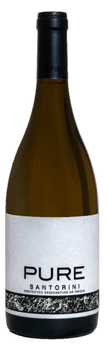
Volcanic Slopes Vineyards Pure 2018

We hear a lot about the role of complexity in good wine.  For me, along with balance, power and interest it is one of the four key factors in determining how good a wine is.  Yet I think complexity has a twin which is not identical.  Complexity has substance and intellect – it challenges you, may even threaten you, it teases you as you try to puzzle it out, and laughs at you when you get it wrong but it can draw you in with its argument and win you round, so you see what it was like all the time.  Its sibling is different – quieter yet immediately striking.  Quite simply the twin is just stunning – that’s all that matters.  No challenge, no threat, no bluster, merely quiet, welcoming beauty.  Its name is purity.  There are wines which seduce not by their complexity, but just because they are so pure that you need nothing else.  I sometimes see them as the vinous equivalent of water – not tasteless but crystalline, innocent, wholesome yet very, very sexy (and if you think that overrates water then just imagine a full-on thirst).  The twins aren’t mutually exclusive.  You can find some wines which have both purity (the immediately striking sibling) but then complexity, which pushes its way to the front subsequently and demands attention – though usually, as a friendly sibling it tries to complement rather than compete.  Riesling is a classic variety where purity shines (in the greatest cases with complexity alongside it) but there are others and recently I’ve realised that assyrtiko is often one of these too.  One thing which tends to mask the purity of a wine (whilst giving complexity) is oak – particularly new oak.  One reason, therefore, why riesling typically often expresses purity.  Having said that older oak may be less of an impediment – I’m thinking here of chablis which has had a few months in older (and perhaps larger) barrels to fill it out slightly but which can remain mouth-wateringly pure.

Pure – VSV

This wine is produced under the label Volcanic Slopes Vineyards – but it is a ‘boutique’ wine production from the much better known Estate Argyros on Santorini and the label doesn’t focus on the VSV company – rather on the name of the wine.  Argyros consistently make some of the best assyrtikos from the island (which means best from the world).  There are a range of styles, all well done, but this caught my attention when I tasted it at Prowein recently.  The wine is made comes from the Episkopi (bishop’s) hillside near there main winery, but with separate production in an old canava – (traditional Santorini small wine production building).  This is the only wine currently made under the VSV label.  We often hear producers liking to boast about their old vines (one recent winemaker told me that his old vine wine was from 25 year old vines!)  This is from 150 year old vines (not an unusual feature of Santorini vineyard) and it has been fermented in cement (an old-fashioned though returning material for fermentation tanks), which I think has contributed a bit to the purity of the fruit.

It has some floral notes yet nothing dominates; the flavours are finely integrated.  It’s a lighter, more delicate style than some of their other wines but the purity shines through.  Lovely acid balance, great length and the wine will age well.  Santorini wines are becoming more and more expensive, but this is worth whatever they want to charge (and will still be a lot less than grand cru burgundy).

Maybe I saw purity in this wine because of a not-so-subtle prompt from the name, which overtook my tasting objectivity.  However, I think not; in this case it called ‘pure’ because that is exactly what it is.

Water into wine

A merry (sort of) Christmas story about the transforming power of wine

As it is Christmas I thought it was a good time to reflect on the source of Christianity and his relationship with wine.  Many of you will know about the use of wine in Christian ritual (Holy Communion or the Mass) and a number of writers have picked that relationship, so I want to focus on something different in this post – the marriage at Cana. 

The stories about Jesus record that he performed miracles and if you know anything about these then you will think of him curing the sick, feeding starving people or giving sight to the blind, all designed to show his power and his mastery of nature.  One of the New Testament books about him, the Gospel of John, records seven of his miracles culminating in bringing his friend Lazarus back from the dead.  Yet an earlier miracle, which the author of the Gospel records as his first, is rather different.

Jesus was invited, along with some friends and his Mother, to a wedding celebration in a town up in the hills above lake Galilee, called Cana.  As is common in most cultures, a wedding celebration was an extravagant business – both in terms of time and money.  The party could go on for some all day and overnight with lots of food and drink provided for the guests.  Managing the party was the responsibility not of the groom, nor the family, but a Master of Ceremonies, whose role was to make sure that all had a good time.  Yet this party, in the home of what seems to have been a fairly well-off family, went wrong.  In the middle the wine ran out!  Maybe the guests were more in need of alcohol than had been planned; maybe the groom was just trying to save a bit or money.  In any event, Jesus’ mother, Mary, picked up that there was no more to drink.  For whatever reason she thought her son ought to know, to which his response, broadly, was ‘what’s it got to do with me?’ 

That didn’t stop Mary, who clearly had a lot of confidence in her son’s ability.  She said to the servants ‘whatever he tells you to do, do it’.  Even more, whatever Jesus had previously said, he decided to get involved.  In the courtyard of the house were six large earthenware jars which held water which was used for ritual purification: cleaning hands before meals, preparing utensils and other forms of washing.  They were empty (no doubt with all the washing of the guests and the wine cups) and Jesus told the servants to go and fill them with water, which they did – ‘to the brim’ according to the story.  Then Jesus told them to take some of the water out and give it to the Master of Ceremonies who drank it, and found that it was wine.  The party kicked on – but the Master of Ceremonies (who clearly had no idea where the wine had come from) went to the Groom and complained to him that the wine he had kept to serve now was better than that which they had started with: ‘surely you know that everyone has the best wine first, and then the cheaper wine after the guests have had too much to drink – yet you have saved the best wine until last’. Not ‘saving the best till last’ by implication meant that the guests would not usually realise that the later wine isn’t so good any more.

And so what?  I’m not interested here in arguing about the veracity of the story; what does interest me is what it means as the first supernatural action of the founder of the most widely accepted religion in the world.  You see, this wasn’t about curing disease or calming storms.  Instead, it was about conviviality.  A party is running out of wine (the implication is that they’ve already drunk quite a bit) and they need more – so miraculously it is provided.  Much of the history of Christianity is about restraint, asceticism, and piety; yet the first miracle is about fun, partying and alcohol.  The first Christian meetings were not structured religious services, with a rubric and ritual, but a sociable meal (agapé – a Greek word meaning a ‘love feast’) which all the believers shared in and which included shared bread and wine.

The next point is the link to the idea of wine being a great transformative agent – it changes us.  It is hardly surprising that from its first discovery wine gave rise to a link with the supernatural.  There was no knowledge of the science of fermentation; no understanding that sugar is changed to alcohol and carbon dioxide.  There was just the empirical evidence: you leave grapes or juice for a few days and the result is something very different.  It is less sweet and has a strange, slightly bitter, taste; yet it is also warming and – noticeably when you’ve had a few gulps – it makes you feel changed.  There could be no other explanation for this than the logical one – that it is magic.  Some god must have touched the grape juice and allowed this transformation which in turn changes you.  It defines humans, changing them from animals (who cannot make wine) into rational beings with a command of the natural world; changing them also from savages into thinking beings, able to project a future, anticipate their own death, and maybe seek to overcome it.  John, the writer of this story, is thus clearly identifying Jesus with what was – even then – a millennia-old tradition which associated wine with religion, and the gods; a big claim. 

Further, the fact that Jesus used the jars reserved for purification – for cleansing from what is bad or dangerous and thus ‘improving’ us – was no surprise either.  The wine is something which makes its drinkers better people and it allows them to celebrate another significant transformation – a wedding which brings two people together to make a new family.

Nevertheless, having said all of this, it’s also important to remember that this story is not about ‘Christianity’.  At the time it refers to there was no Christian religion, and no believer.  It is a story about Jewish culture, and a Jewish man who tries to teach, as a Rabbi, fellow Jews how to live a better life, and who perhaps aspires to personify some of that better life.  Wine has also been a fundamental part of Jewish religious and communal ritual as well, both weekly on the Sabbath and annually at Pesach (Passover).

*          *          *

Paradoxically, the Christian message about the value of wine in instilling a sense of community, and indeed in representing how lives can be transformed, has often been ignored or even rejected by the Church.  This seems bizarre, given that wine is incorporated into religious ritual, yet with the growth of prohibition movements in many countries this changed, because one mainstay of the campaign to stop people drinking were groups of Christians.  These were invariably Protestants, generally of a fairly extreme persuasion (Catholics have never warmed to the idea of banning alcohol). 

Thus, my grandparents, who were Protestant missionaries in a small town in Algeria (at that time part of France and the major source of cheap wine in that country) were adamantly opposed to drinking alcohol.  It was the work of the devil, and the fact that (according to them) the Catholic priest in the town was regularly drunk merely compounded his heresy.  Money and time spent carousing was money that could be used to ease the lot of poor people and time which should have been spent in the service of God.  Thus, they never drank, and never knew that any of their offspring did – they would have been mortified by that.  It was a joyless, hard religion. Often, with the widespread abuse of alcoholic drinks, its opponents had a good point to make.  However, as history has taught, banning doesn’t solve the problem – restraint is what has an effect and fun and enjoyment are healthy, necessary and good, not evil.

Yet, of course, as firm believers in what the Bible taught, they had a problem.  Jesus drank wine, and left the Church a ritual of wine drinking to remember him by.  So how could wine be so diabolic?  Because, it was argued, the wine Jesus drank was not alcoholic – it was grape juice: that is what as being drunk at the wedding at Cana.  That ignores the fact that in a hot country like Israel any grape juice would naturally ferment within a few days, and that couldn’t be prevented; modern life taught that wine was evil so, self-evidently, Jesus could not drink it, so (not for the first time) science had to be thrown out and reason had to be turned on its head in pursuit of the truth.

*          *          *

In case you think this post unduly focused on Christianity, the next one early in the New Year will be in a different religious context.  Meanwhile, for many of us this will be a holiday time.  So to everyone who reads this – whatever your religion or none, whether the most significant day for you is the 25th or 31st December or the 1st or 6th of January – a very merry holiday and a healthy and safe New Year.

Wine and Women

Over the last six months I’ve focused all my posts on wine in the time of Covid-19. I’ll move on from that topic shortly – but one of the results of this has been that I’ve not addressed other important issues which have a major impact on wine including things like Black Lives Matter and #metoo. However, a friend passed on to me a link to an essay by another blogger about the role of women in the wine industry. It takes a bit of time to read but is a heartfelt response to five years of pursuing a dream of working with wine while having to deal with inappropriate and offensive men. I strongly recommend that everyone interested in wine reads it – and especially men who shouldn’t pass it by thinking it is not so relevant to them: https://bottledbliss.wordpress.com/2020/09/10/women-wine-and-the-uncomfortable-conversation-we-need-to-have/

The end of wine as we know it?

A recent visit to the Pfalz offered another perspective on the impact of climate change on wine.  The winemaker at Muller-Catoir noted that making good riesling is getting harder.  ‘We will still make good riesling in 20 years; but in 30?  Maybe not.’  They are increasingly planting the pinots (noir and blanc) rather than riesling.  They are also moving away from lower-level vineyards and up into the traditional vineyards in the hills.

Meanwhile at Bassermann-Jordan we were told that they used to use a sledge every winter; now they have not had snow for the last four years.  Twenty years ago they harvested in October; now it can even start at the end of August.  They are also talking about irrigation as a possibility for the future.

English wine and British wine

Recently I was at at the marketing conference for WineGB – the coordinating body for the English and Welsh wine production industry – mainly high quality, traditional method, sparkling wine.  It took place as Brexit was coming into effect, and the feeling at the conference was very interesting.  WineGB made a lot of the fact that they are British, and proud of it.  Their logo incorporates the Union Flag.  That isn’t a pro- or anti-Brexit perspective, just a recognition that this is what they do, irrespective of politics, and a pride in the fact that they do it well, and have great potential for the future. 

English sparkling wine is just beginning to get a bit of attention in the global world of wine.  Some is sold to Australia; American critics, like Eric Asimov of the New York times has praised it.  With the departure of the UK from the EU maybe there is a real opportunity for it to expand on international markets.  Unlike most British businesses they are not locked into exporting to the continent at this stage – the English-speaking world is more important.  The industry is still exploring how to manage, structure and market itself, and just maybe freedom from the more rigid EU notion of a PDO (appellation) could allow it the leeway to evolve dynamically and creatively. 

A typical English vineyard

One of the things that WineGB want to do as part of their strategy is reclaim the notion of ‘British Wine’.  British wine has been a major part of the market for alcoholic drinks from well before the time of English sparkling wine.  However, its name is deceptive – it has nothing to do with grapes grown in Britain.  Rather, it is made in Britain using grape juice from other countries, and turned into a fortified, rather sweet but pale imitation of good cream sherry (sometimes flavoured).  It’s also very cheap, and beloved of those for whom alcohol intake is more important than complexity, balance and intensity.  The best known of these – paradoxically given its reputation for fuelling hangovers and fights – has been made by an abbey in Devon since the end of the 19th century.  The English wine production industry has skirted around this aberration for some time – scared of being damned by association with a competitor which bears no relation to the drink made made from grapes grown in the cool, sodden climate of the UK.  Now, however, it seems that they want to take the competitor on – and come out as proud of the ‘British’ part of their moniker – which seems obligatory given the name.  Maybe soon we’ll be talking regularly about British fizz and consigning sweet wine from French or Spanish juice to the vinous seconds bin.

Just one question for WineGB though.  What happens to their name when Scotland secedes from the Union and part of the British Isles is no longer included?

Retsina II

27th December 2019

I’ve already written before about retsina – but it’s a wine style which because of its history and very specific cultural context I find fascinating; so you are going to get a bit more of it I’m afraid.

These reflections are prompted by a tasting I was given of retsina when in Greece a few months ago, as well as some background information from a few winemakers.  I need first to clarify an uncertainty I raised in my last post on the subject; it seems, according to Prof. Yorgos Kotseridis of the Agricultural University of Athens, who has carried out research, that resin has no anti-oxidative powers, and cannot protect wine versus spoilage.  I would suggest, then, that the reason for adding it is to cover up the oxidative characters of wines which, in the past with inadequate storage containers, would often become undrinkable within a year or so of production.

The big problem that modern producers face is knowing what style to make.  The Greek author and critic Constantine Stergides gave me a pretty good summary of the conundrum that producers face.  In the past the bulk wine used a lot of retsina, often up to 10kg per tonne of grapes; now, for the most refined versions it is much less – about 250gms per tonne.  A little while ago the main producers started to bottle these ‘lighter styles’ for export markets.  The result was that domestic drinkers gave it up as it wasn’t to their taste any more.  Now it’s made with limited resin and sold to partner with sushi!  This style doesn’t go so well with Greek food which needs a more forceful style – so the traditional market has been lost.  Meanwhile young, Greek drinkers wouldn’t be seen dead with it.  In the north of Greece it’s mixed with coke and trendy modern winemakers recoil from making it. The issue of food was repeated with other people I listened to – especially the fact that it pairs well with sushi, because it can stand up to strong flavours like ginger, wasabi, and soy sauce; it also goes with other intense foods, such as anchovies or pepper. 

Savatiano vines in Attica – the most common grape used to produce retsina

However, the styles have become so light that it is often barely detectable, so that you get onto issues of authenticity – and here we move on from the issue of what consumers would like to drink to what producers think is correct.  If you produce a retsina suited to modern (non-Greek) tastes what is the point of calling it retsina anyway?  This issue of authenticity goes further.  Constantine Sterigdes notes that many producers are now making it with the grape assyrtiko, rather than savatiano or rhoditis.  This – it is claimed – adds elegance but it seems to me that assyrtiko is more probably selected because it has become very fashionable and  easier to sell.  In any event, retsina was never designed for elegance.  One winemaker, Dimitris Georgas,  said he would not use assyrtiko, and that retsina needs a much more robust, even rustic variety such as savatiano in order to shine.  Meanwhile retsina has become a focus of contested ideas of Greek vinous identity.  It was a traditional working-class drink.  As some producers moved towards producing ‘good’ wines – wines which would shine internationally – from the 1980s onwards, there was a shift towards using French grape varieties.  This has been, after all, a world-wide phenomenon; if the French make the best wines in the world then we should use the same grapes as them, to show that we are worthy of respect for our wines.  Think of Chile, Lebanon, Super Tuscans or Georgia amongst many others.  Fortunately Greece has, in part, moved on from this and first assyrtiko and now xynomavro, agiorgitiko, moschofilero, and others are beginning to shine.  However, as Yiannis Karakasis MW has said, ‘retsina is a blessing and a curse; everyone knows about it but it has an appalling reputation’.  Many Greek producers who want to show how good their wines can be wanted to forget about something which can taste so coarse and unrefined.

In the end, as Eleni Kechris, another winemaker, pointed out the question is not how much resin but how good is the resin, and how good is the wine?  It shouldn’t cover the wine’s fruit.  Indeed, the best retsinas are not simply resinous; they can have aromas of thyme and rosemary as well as pine which complement rather than dominate what comes from the grape.  I’m willing to drink retsina not just because it’s a relic of another day, but because, in the right situation, it can be very enjoyable.

If you want to drink this debate, you may find some of the following wines interesting to try:

Gikas Winery Pine Forest 2016.  Very restrained pine – a merest hint.  This is made with assyrtiko and has good acidity.  The resin is collected from May to July and goes into big ‘tea bags’ which are placed in the ferment.  They experiment with it by fermenting at different temperatures; the higher it is the more bitterness is extracted.  It seems that 15-19oC is ideal, for about 10-20 days.

Nikoulou Winery: Botanic 2017.  A sparkling retsina.  Evident resin on the palate but less on the nose.  However, there are also floral and herbal characters (fennel especially).  I found the mousse rather dominant, and it is quite bitter on the finish (which is not necessarily a criticism).

Kechris Winery Roza 2018.  A red retsina made with xynomavro.  The resin is not very obvious.  An interesting wine, phenolic (naturally!), clear acidity, and with some red fruit.

Kechris Winery Afros 2018.  White retsina made from rhoditis.  A residual sugar of seven grammes/litre (so just evident) which, the producer claims, emphasises the resin.  Intense – ‘reminiscent of the old style’ she says.  There is a hint of spritz which also accentuates the resin character on the nose. Very traditional but balanced and good length.

The Revolution in Lebanon

16th November 2019

I’m writing this in Hong Kong, in the wake of the protests which have paralysed the city for a week now.  And I want to talk about protests – but not in Hong Kong, rather in Lebanon, and how they may reflect what is happening with wine in the country.

I’m prompted to do this by a curious confluence of movements in our cosmopolitan world.  A student of mine in Dijon, is doing an internship here, helping to distribute French wine in this Special Administrative Region  of China.  Roland is a trained winemaker, and his family have a domaine – in Lebanon – to which he will return shortly. Read the rest of this article here

Will there be wine from Santorini in 20 years’ time?

I’ve made this post after my return from Greece.   The title sounds as though it is some portentous, vinous, doomsday-focused, film – but it was prompted by a presentation we had in Santorini from Yiannis Paraskevopoulos.  Yiannis is the winemaker at Gaia Wines – who produce wine in various parts of Greece but are, to my mind, one of the best producers of Santorini assyrtiko.  Yiannis is also, however, a professor at the University of West Attica with a PhD in oenology and has coauthored papers on topics such as the phenol content of wines and fuzzy logic in grape variety identification.  It was he who said he thinks that ‘the statistics suggest that wine will die out on the island in 20 years’ time’ and if he, with his background, believes that, it is worth paying attention to.

So what do the statistics say?  First, that there has been a 47% drop in the production of assyrtiko over the last 14 years (3.4% p.a.).  If you take just the last eight years that decrease becomes 7.6% p.a. Why this drop in supply?  Some of it can be attributed to climate change.  Santorini is a rocky island, with little water-retaining clay, and average rainfall has decreased by over a third in the last 15 years, now at about 250 ml per year – drier than almost any other quality vineyard region in the world.

Beyond that, however, there has been a gradual abandonment of the vineyards.  Older growers retire, and they aren’t being replaced.  Working the vines is hard, and you can’t easily mechanise.  Tourism (or migration) is much easier.  And even if vineyards are not taken out of production, with fewer people to work them the vines are less well managed and therefore yield less.

This concern for the future was mirrored with a very wide-ranging but detailed interview with Matthaios Argyros, of the eponymous domaine, one of the biggest private producers on the island – and family which has been growing grapes since the early 19th century and making wine since 1903 – so he has a long-term view on what is happening on the island.  He makes the point that what eight workers could achieve on mainland Greece requires 13 or 14 workers here at twice the salary. He agrees that fewer young people want to learn the skills required and work manually in the vineyard– viticultural skill is dying out. Even the new wineries which are being set up may not have the skills or experience to work vineyards effectively.  Only his estate and one other, the well-known Sigalas (also making great wines) have actually planted new vineyards in recent decades. Matthaios is also exercised by the way that that the price of grapes has risen – as I noted in my last post.

This has benefited the growers, and may persuade some to stay in business, but a rise from 1€ per kilo in 2011 to 2€ in 2015 to 5€ in 2019 means that the price of the wine has to rise dramatically.  This is something I’ve noticed; four years ago the best wines were a bargain (and deserved to be pricier).  Now they compete with premier cru Chablis, even top white wine from the Côte d’Or.  It’s not that the wines don’t bear comparison in quality terms – but they are not comparable in terms of reputation and the awareness of most consumers.  Additionally, Matthaios points out the 5€ price is across the board.  It isn’t a premium for quality; meticulous, quality-focused growers get the same as the careless and uninterested.  So what incentive is there to bother?  What is more, the increasing value of grapes doesn’t seem to have stemmed the decline in production.  In 2016 the price per kilo went up to 2.75€, and in 2017 it touched 4€ before reaching 5€ this year.  Yet these three years have shown the steepest recent decline in grape production, from 2750 tonnes to just above 1000 tonnes.  Yet even if you ignore this recent acceleration in the decline of yields, projecting what has been happening since 2005 suggests that sometime around 2037 no more wine will be made on the island.

Paradoxically, if these wines were lost to humanity it would be the end of vineyard systems which date back to the time of the great explosion around 1600 BCE, and with vines that – because of the propagation systems used and the lack of phylloxera in the island are often 300 or 400 years old.  It would also be the end of a wine that is the result of a unique volcanic terroir that humans have been responding to for centuries – not just the idiosyncratic but effective pruning, but the terraces, the walls and the canavas – ancient family cellars.  That would be a sad loss to the human cultural heritage that UNESCO tries to protect and just as devastating as the destruction of a classical temple or a Mycenaean royal tomb.

A typical, dusty volcanic Santorini vineyard.